Your Utility Bill Is More Than Just an Amount Due
Utility bills can be confusing, making it hard to understand what you’re actually being charged for. Different companies use different formats, rate structures, terminology, and billing periods, which can make it hard to establish a clear baseline for your monthly expenses.
Your utility bill can show you:
- How much energy or water you used
- How many days were in the billing period
- What rates and fees apply
- How current usage compares to previous periods
While every utility bill is different, the core concepts are generally the same. Understanding these details can help homeowners, building owners, and property managers make more informed decisions about utility use and costs.
Understanding Your Energy and Water Usage
Most utility bills show how much of a resource you consumed during the billing period and how those usage charges are calculated.
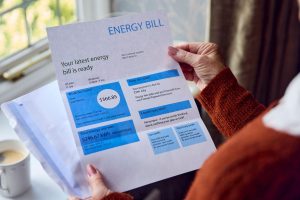
Electricity: Kilowatt-Hours (kWh)
A kilowatt-hour (kWh) measures the amount of electricity used over time.
Changes in electricity use may be driven by:
- Heating and cooling (weather-dependent)
- Longer operating hours
- Occupancy
- Additional equipment or appliances
- Electric vehicle charging
- Changes in building operations
Natural Gas: Therms
Natural gas usage is often measured in therms. Consumption can change significantly based on outdoor temperatures, building size, heating equipment, and occupancy.
Water: Gallons or Cubic Units
Water usage may be measured in gallons, cubic feet, or other units depending on the utility. A sudden increase may indicate a leak, increased occupancy, seasonal irrigation, equipment changes, or another operational issue.
Reviewing Your Usage History
A single month’s bill provides a snapshot, while a series of monthly bills reveals trends over time. Many utility bills include a graph or table showing historical consumption, which can help you identify patterns and changes in your energy use.
Watch for These Common Red Flags
- A sudden increase in usage
- A sharp increase in cost without a corresponding increase in usage
- Higher demand charges
- An estimated bill that differs significantly from normal usage
- A rate change
- A new recurring charge
- Major changes compared with the same period last year
Not every change is a problem. Weather, occupancy, operational changes, and utility rate adjustments can all affect a bill. However, unexplained changes are worth investigating.
An increase in electricity use during a heat wave may be expected, while a similar increase when weather and operations have remained stable may require further investigation.
Understanding Utility Charges

Your total amount due is made up of several different charges, not all of which are related to actual usage.
Service Charges
A service charge is generally a fixed monthly fee for maintaining your connection to the utility system and providing service. You’re generally charged this fee regardless of how much energy you actually use.
Energy or Usage Charges
Energy charges are based on how much energy you consume, typically measured in kWh for electricity or therms for natural gas.
Unlike fixed service charges, these costs change based on usage.
Supply and Delivery Charges
Some utility bills separate the cost of producing or purchasing energy from the cost of delivering it. Supply charges represent the cost of the energy itself. Delivery or distribution charges typically cover the infrastructure required to deliver that energy, such as power lines, pipes, meters, and other utility equipment. Depending on where you live, supply and distribution services may be provided by different utility companies and may or may not be billed together.
Demand Charges
Some commercial and industrial customers also pay demand charges. While kWh measures total electricity used over time, kilowatts (kW) measure the rate at which electricity is used. A building may incur higher demand charges when a large amount of electricity is used during a short period of time, often because multiple pieces of equipment are operating simultaneously.
Demand charges are generally more common on commercial utility bills. Reducing demand can be tricky, but is most easily done with building management systems that allow for real-time monitoring. Building managers can use this data to make changes in usage, shifting energy load to off-peak periods.
Riders, Taxes, and Other Fees
Utility bills may include riders or adjustments for specific utility costs and programs. Taxes and other fees can vary based on location, utility, customer type, and energy source.
Understanding Your Rate
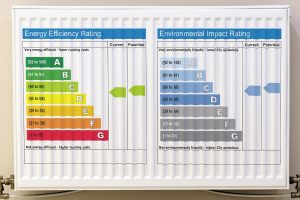
Your utility rate determines how certain charges are calculated. Some customers pay a flat rate per unit of energy. Others may have tiered, seasonal, time-of-use, or demand-based rates.
Under a time-of-use rate, electricity costs more during certain hours and less during others. This means when you use electricity can affect what you pay.
Comparing Usage and Cost
A higher bill does not always mean higher energy use. Utility costs can increase because of higher rates, seasonal pricing, demand charges, taxes, fees, or a longer billing period.
The most useful approach is to compare usage (how much energy or water you consumed) with cost (how much you paid for those units of energy). Together, these numbers provide a clearer picture of what is driving changes in your utility costs.
Turn Utility Bills into Useful Data
Understanding a single utility bill is useful, but tracking utility data over time can help you make more informed decisions and identify opportunities for long-term savings.
Tracking several months of bills can reveal whether a change is temporary or becoming a pattern. Centralized utility data can turn individual bills into a clearer picture of building and portfolio performance.
At EnergyPrint, we help you collect, validate, track, and analyze your utility data so you can move beyond simply paying bills and begin using your data to make better energy improvement decisions.
Want to Find More Insights Hidden in Your Utility Bills?
Your utility bills contain more data than just your total usage and amount due. Learn how to uncover additional insights that can help you better understand energy use, identify potential issues, and make more informed energy decisions in our article, 10 High-Impact Energy Insights Hidden in Your Utility Bills.